

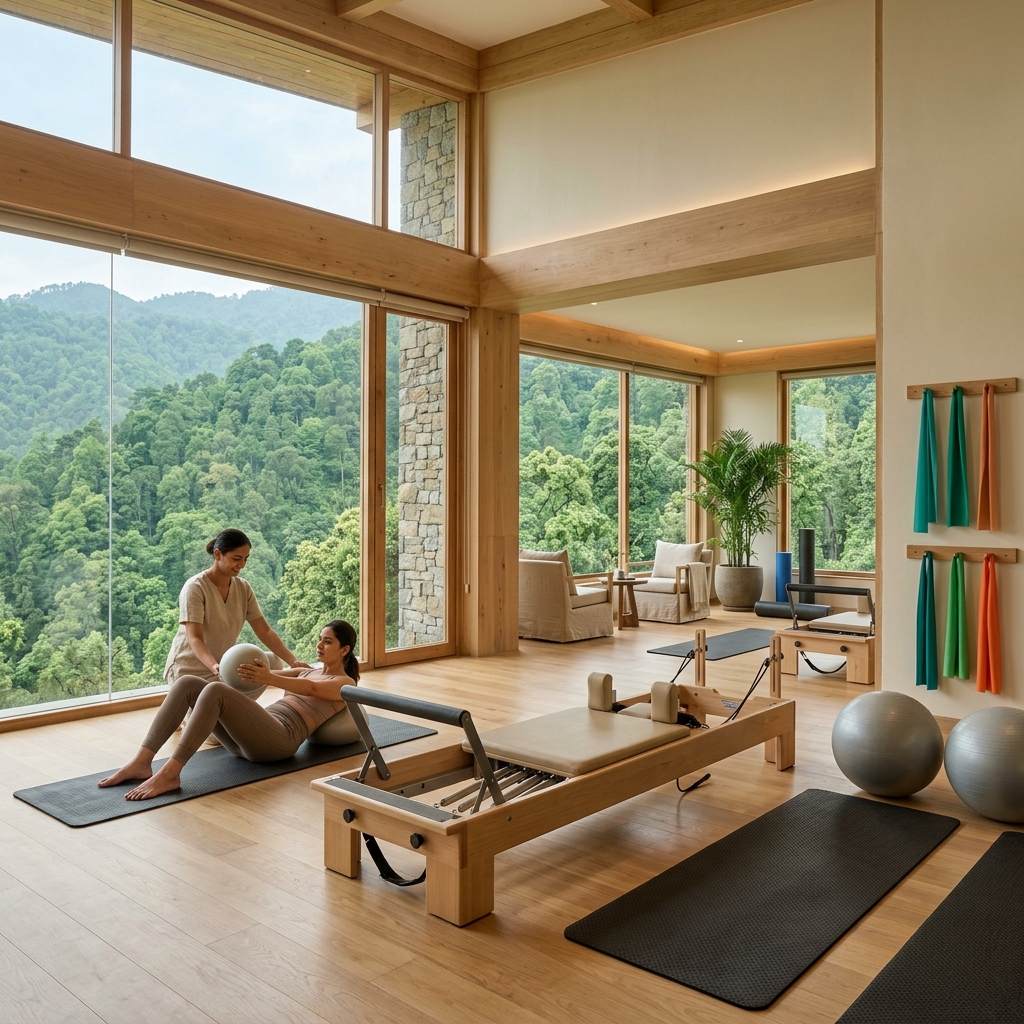
Pain Management
Understand the Pain. Restore the Movement.
Pain tells us something is wrong. But the place where we feel it may not always tell us the complete story.
Our approach looks beyond the painful area towards movement, function, strength and the whole person.
What Is It?
Pain Management brings together appropriate assessment, physiotherapy, movement and supportive wellness approaches to help understand factors influencing physical discomfort and function.
Why Does It Matter?
How Pain Extends Beyond the Painful Spot
Pain can change how we walk.
Antalgic limping or altered stride creates secondary strain across the hips, spine, and opposite limb.
How we sleep.
Nocturnal discomfort interrupts deep REM recovery, compounding systemic fatigue and muscle guarding.
How confidently we move.
Fear of re-injury (kinesiophobia) leads to cautious, stiff movement patterns that restrict natural mobility.
How active we remain.
Gradual avoidance of favorite activities leads to deconditioning and diminished social vitality.
Even how we feel emotionally.
Persistent physical discomfort drains mental optimism, fostering frustration and irritability.
So improving life with pain can involve more than simply focusing on the painful spot.
How Do We Understand You?
Our comprehensive evaluation explores:
The 8 Pillars of Pain & Movement Assessment
Where & When You Feel Pain
Symptom DynamicsMapping specific trigger times (morning stiffness, end-of-day ache), directional movements, and pain quality.
What Could Moving Better Feel Like?
Move With Greater Ease
Unwinding compensatory muscle guarding and restoring natural, unhurried kinetic fluidity.
Build Strength
Strengthening deep joint-stabilizing muscles to provide resilient structural support.
Improve Mobility
Restoring functional range of motion across restricted joints, myofascia, and spinal segments.
Regain Confidence in Movement
Overcoming fear of motion by experiencing safe, pain-free progression in every session.
Understand Your Body Better
Gaining clear biomechanical awareness of why pain occurred and how your kinetic chain works.
Return to Everyday Activities
Reclaiming the freedom to walk, climb, garden, travel, and play without constant hesitation.
Feel More Independent
Mastering practical self-care tools and corrective movement to manage comfort autonomously.
Learn How to Protect Your Progress
Establishing sustainable postural habits and preventive routines that preserve long-term gains.
How Do We Personalise?
Why Two Similar Symptoms Require Different Care
- • Gluteal inhibition from prolonged sitting
- • Tight hip flexors pulling patellar tracking
- • Focus: Hip activation & postural alignment
- • IT band friction from downhill descent
- • Ankle pronation & calf tightness
- • Focus: Foot kinetic stability & myofascial glide
Two people with knee pain may have completely different movement patterns, histories, strength and lifestyles.
We don't personalise only around where it hurts. We personalise around the person who is hurting.
What Will You Experience?
Depending upon professional assessment:
Physiotherapy Assessment
An in-depth functional physical assessment examining joint angles, neural tension, kinetic imbalances, and root factors.
What It Is
One-on-one clinical evaluation by certified physiotherapists analyzing movement quality, muscle recruitment, and postural deviations.
Why Recommended
To identify the true underlying contributors to discomfort rather than merely addressing the symptomatic spot.
What To Expect
Unhurried observation of walking, functional bending, gentle joint palpation, and clear visual explanations of findings.
How Does It Connect?
Relevant integration may include Yoga, Ayurveda, Modern Therapy, Naturopathy and Emotional Healing.
Yoga & Mindful Movement
Gentle restorative asanas and breath awareness that enhance joint flexibility and movement confidence.
Ayurveda Sanctuary
Classical Kizhi herbal poultices and Kati Vasti warm oil reservoirs for deep musculoskeletal nourishment.
Modern Therapy
Pneumatic compression, red-light photobiomodulation, and spinal decompression for cellular tissue repair.
Naturopathy Centre
Mineral mud packs and hydrotherapy contrast baths to reduce localized joint inflammation naturally.
Emotional Healing
Addressing emotional stress, chronic holding patterns, and fear-avoidance cycles linked to pain.
Siddha & Varma Shastra
Precise stimulation of vital 108 Varma pressure points to unblock restricted neuro-muscular pathways.
Restoring function, mobility, and confidence through an integrated healing circle.
What Can You Take Home?
Understanding How to Move
Clear knowledge of your biomechanics, safe joint alignments, and movement efficiency.
What to Strengthen
Targeted exercise routines focusing on your specific weak stabilizing muscle groups.
What Habits May Need Attention
Ergonomic, postural, and daily habit adjustments to prevent repetitive physical strain.
How to Remain Active Safely
Lifelong self-care strategies to enjoy sports, trekking, and daily life with confidence.
The goal is not only a better session. It is greater confidence in everyday movement.
FAQs
Other Sanctuaries at Om Kalyanam
Ayurveda Sanctuary
Authentic Charaka Samhita therapies, customized herbal decoctions, and classical Panchakarma.
Siddha & Varma Shastra
The ancient Tamil sage medical system focusing on the 96 Tattvas and vital Varma pressure manipulation.
Modern Therapy
Assessment-led contemporary wellness technologies including hyperbaric oxygen and red-light recovery.
Yoga & Pranic Breathwork
A personalised practice connecting physical movement, conscious breath, and inner awareness.
Understand the Pain. Restore the Movement.At Om Kalyanam Santhigiri
Experience specialized physiotherapy assessments, movement re-education, and integrated holistic care to restore lifelong physical confidence.